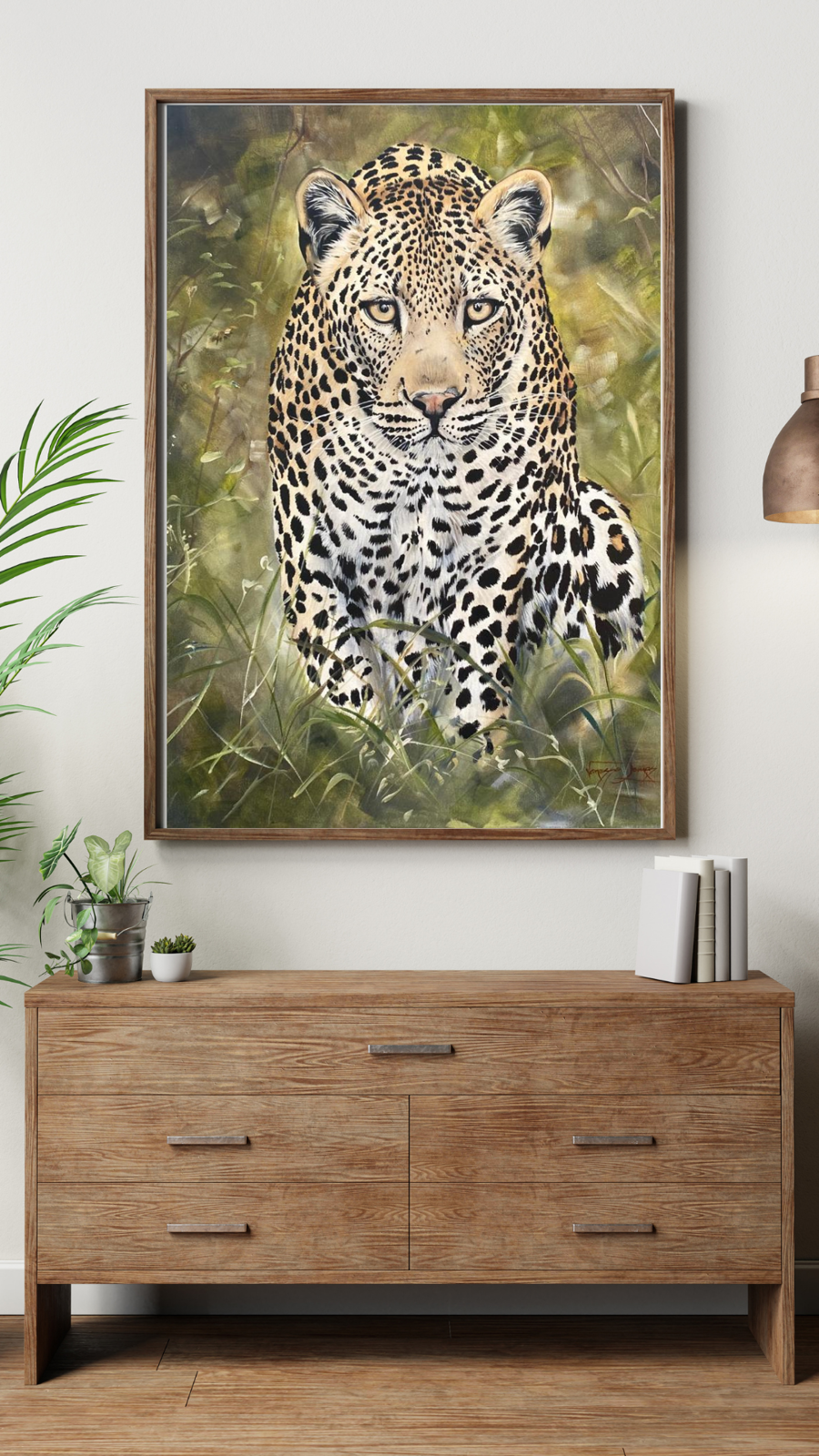
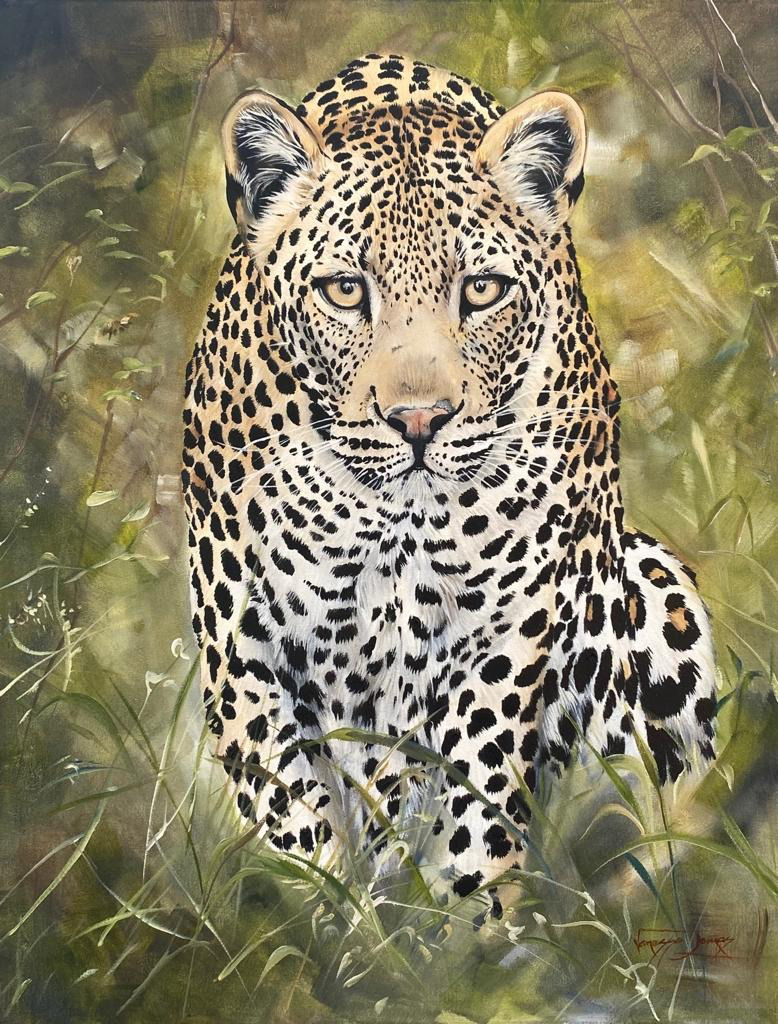
Ntsakelo - the wanderer
Item Number: 2
Category: Art
Retail Value: ZAR R12,000.00
Bidding Starts at:
ZAR R4,000.00
0 Bids
Bidding has not started on this item.
Minimum Bid Increment: ZAR R500
Buyer's Premium: 6.00%
Time Until Opening
5
Days
Days
:
07
Hours
Hours
:
46
Minutes
Minutes
:
40
Seconds
Seconds
Description
Ntsakelo has become an ambassador for our Ingwe project. Born in the Hoedspruit Wildlife Estate in 2021, his mother is the one-eyed female, Kulua. Ntsakelo is a very relaxed leopard who was constantly seen, day and night, by residents of the wildlife estate. We have 123 sightings of him between February 2023 and December 2024.

He dispersed first to Khaya Ndlovu, then he was seen crossing the busy R40 road multiple times (which splits the town of Hoedspruit in two). He also visited another wildlife estate called Zandspruit, moved north to a citrus farm, and then to a hunting farm and another game reserve. Our last sighting of him was in December 2024, crossing the R40.

Ntsakelo is a true ambassador because he perfectly represents the threats leopards face every day, including road accidents, snares on farms, illegal hunting, and navigating human-dominated landscapes. I am hoping we find him safe and sound in a reserve soon.

Paint print: A0 canvas to stretch on frame. Unique edition.

Unframed and all shipping, tax and tariffs will be the responsibility of the buyer.
Additional Information
Your investment directly supports our mission: To effectively conserve leopards in South Africa by empowering stakeholders through practical scientific recommendations, enabled by formal research, citizen science, novel technologies, and proactive collaboration.

Every bid fuels our most critical initiative: the Road Ecology Project, implementing life-saving mitigation measures against road mortality. It also enables the final deployment of the Ingwe Mobile App—the first AI-integrated citizen science tool for faster leopard identification—and helps grow our capacity for evidence-based conservation.